
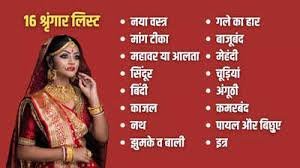
In Indian culture, the Solah Shringar (16 adornments) is more than just a ritual of beauty; it is a profound symbolic representation of the Goddess’s creative power (Shakti). From a Vedic perspective, these sixteen steps are deeply intertwined with Jyotish (Astrology), where each adornment aligns with specific planetary energies to bring balance, prosperity, and divine grace to the wearer.
Whether you are a devotee of Maa Durga or an enthusiast of Vedic science, understanding the astrological “why” behind these rituals reveals a path to inner and outer harmony.
The Celestial Connection of the Solah Shringar
1. Bindi (Mercury/Moon)
Placed on the Ajna Chakra (third eye), the Bindi represents wisdom and concentration. Astrologically, it strengthens Mercury for intellect and the Moon for emotional stability.
2. Sindoor (Mars)
The red vermillion applied in the parting of the hair symbolizes the energy of Mars. It is believed to grant the husband longevity and the wearer a courageous, protective aura.
3. Maang Tikka (Moon/Sun)
Hanging on the forehead, the Maang Tikka controls body heat and mental peace. It balances the Moon’s coolness with the Sun’s radiant energy, ensuring the wearer remains centered.
4. Kajal (Saturn)
Kajal (Kohl) protects the eyes from the “evil eye.” In astrology, black represents Saturn. Applying Kajal is a way to ward off Rahu’s malefic gaze and ground one’s vision.
5. Nath (Nose Ring)
The nose ring is often associated with Venus, the planet of beauty and luxury. It is also scientifically linked to the reproductive health of women in Ayurveda.
6. Haar (Necklace/Venus)
The necklace sits near the heart, the seat of emotions. Made of gold or gems, it strengthens Venus, attracting wealth and enhancing the wearer’s charm.
7. Karnphool (Earrings/Jupiter)
Earrings are not just ornaments; they are placed at acupressure points. Astrologically, they honor Jupiter, the planet of hearing divine truth and gaining spiritual knowledge.
8. Mehendi (Mercury/Venus)
The cooling effect of Henna calms the nerves. Its intricate designs represent the playfulness of Mercury, while its deep red color invokes the passion of Venus.
9. Choodiyan (Bangles/Moon & Mars)
The sound of bangles creates a positive vibration in the environment. Glass bangles are often linked to the Moon (emotions), while gold ones resonate with Jupiter and Mars (strength).
10. Baajuband (Armlets/Mars)
Worn on the upper arm, Baajuband is a symbol of protection and valor, directly governed by Mars, the planet of strength.
11. Arsi (Thumb Ring/Venus)
The thumb ring often contains a small mirror. In Palmistry, the thumb is the seat of Venus. This adornment ensures the Devi (and the wearer) can always see their own divine reflection.
12. Kamarband (Waistband/Jupiter & Venus)
The waistband protects the solar plexus. It signifies the management of wealth and family, areas ruled by Jupiter (wisdom) and Venus (assets).
13. Payal (Anklets/Moon)
The silver of the anklets helps ground the body’s energy to the Earth. Silver is the metal of the Moon, helping to control heat of body and emotional fluctuations.
14. Bichhiya (Toe Rings/Mercury)
Usually worn on the second toe, these are connected to the uterus and heart. They help regulate the menstrual cycle and are influenced by the communicative and circulatory power of Mercury.
15. Ittar (Perfume/Venus)
Scent is the most direct way to influence the subconscious. Using natural fragrances like sandalwood or jasmine pleases Venus, creating an aura of attraction and peace.
16. Keshapasharachana (Hair Adornment/Saturn)
A well-groomed braid or bun signifies a disciplined mind. Since hair is associated with Saturn, keeping it adorned with flowers (Sun/Venus) ensures that discipline is met with grace.
Conclusion
The 16 Shringaar of Devi is a bridge between the material and the spiritual. By understanding the astrological context, we realize that beauty is not vanity—it is a form of Sadhana (spiritual practice) that invites the cosmic powers of the universe to reside within us.
For consultation contact 9889218750